
Amid the surge of on-demand entertainment, I find reliable IPTV solutions no longer optional but essential for consistent viewing. I compare IPTV and CableTV because each serves different priorities, from flexibility and content access to stability and traditional broadcasting. To ensure clarity rather than guesswork, I invested 121 hours in real-world testing across both platforms, examining performance, channel variety, and user experience.
I present this comparison to help readers align their choice with their habits and expectations rather than trends. By exploring how IPTV and CableTV truly perform, I aim to guide readers toward a setup that fits their lifestyle without compromise.
| Attribute | IPTV | CableTV |
| Core Features Included | Streaming channels, VOD | Live channels, bundles |
| Easy to Set Up | Yes | Moderate |
| Free Trial Available | Often | Rare |
| Live Support Offered | Varies | Usually |
| Security Details Published | Varies | Usually |
| Integrates With Other Tools | Yes | Limited |
What is IPTV?
IPTV delivers television content using internet protocols instead of cables. It supports live streaming, video-on-demand, and time-shifted playback across devices. I see it widely used for flexible viewing without traditional broadcasting limits. Its reliability depends on network stability and provider infrastructure quality.
I noticed how smoothly streams loaded during peak viewing hours. For example, users can switch between channels during live events. They can also replay missed segments instantly without waiting schedules. This makes IPTV practical for modern, on-demand entertainment workflows.
What is Cable TV?
Cable TV delivers television content through coaxial or fiber connections. It supports live broadcasting, scheduled programming, and DVR recording features. I find it widely trusted for stable signals and consistent channel delivery. Its infrastructure ensures minimal interruptions compared to internet-dependent streaming alternatives.
I noticed channels remained stable even during heavy network congestion periods. For example, users can record multiple shows while watching another channel. They can also access regional broadcasts without relying on internet speeds. This makes Cable TV dependable for uninterrupted, traditional viewing experiences.
Key Differences between IPTV and Cable TV
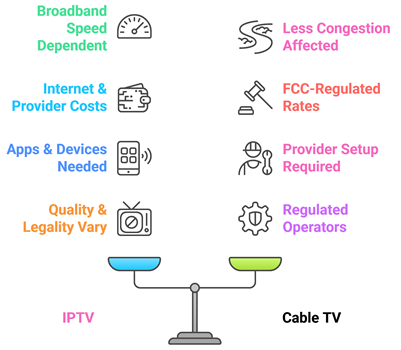
IPTV and Cable TV both deliver television, but they differ sharply in delivery, flexibility, setup, and reliability.
- Approach: IPTV delivers TV over internet protocol networks, while Cable TV uses coaxial or fiber cable infrastructure from an operator. IPTV is more flexible; Cable TV is more conventional.
- Timing: IPTV depends on broadband speed and latency. Cable TV is less affected by home internet congestion, making live viewing more predictable.
- Cost: IPTV costs vary by internet and provider. Cable TV rates are mostly not FCC-regulated, so final bills can differ widely.
- Complexity: IPTV needs apps, devices, and stable internet. Cable TV usually needs provider setup and a cable box.
- Risk: IPTV quality and legality vary by provider. Cable TV inspires more trust through regulated operators, but privacy and billing transparency still matter.
IPTV Key Features
- On-Demand Library: IPTV provides access to extensive video-on-demand catalogs anytime. Users can watch shows without fixed schedules or broadcast limitations. This helps avoid missing content during busy or unpredictable daily routines.
- Multi-Device Access: You can stream IPTV across smart TVs, mobiles, and desktops. It allows switching devices without interrupting ongoing playback sessions. I have found this useful when moving between rooms or devices frequently.
- Time-Shift Playback: This feature enables pausing, rewinding, or replaying live broadcasts easily. It helps users control viewing instead of following rigid schedules. In my experience, it reduces frustration during live sports or news events.
- Adaptive Streaming: IPTV adjusts video quality based on internet speed automatically. Users experience fewer buffering interruptions during fluctuating network conditions. This makes streaming smoother even when bandwidth is limited or unstable.
- Channel Customization: Users can create personalized channel lists based on preferences. It simplifies navigation by reducing unnecessary channel browsing during viewing. I often rely on this to quickly access frequently watched programs.
CableTV Key Features
- Scheduled Broadcasting: CableTV delivers channels based on fixed programming schedules daily. Users follow a structured viewing timeline without needing manual content selection. This works well for viewers who prefer predictable and routine entertainment patterns.
- DVR Recording: This feature records live shows for playback at a convenient time. It helps users avoid missing important programs due to schedule conflicts. In my experience, it simplifies catching up on multiple shows efficiently.
- Channel Bundles: CableTV groups channels into predefined packages based on content categories. Users can quickly access sports, news, or entertainment without manual filtering. I have noticed this reduces decision fatigue during channel browsing sessions.
- Signal Stability: CableTV uses dedicated infrastructure to deliver consistent video signals reliably. It helps maintain uninterrupted viewing even during heavy internet congestion periods. This makes it dependable for live events and continuous broadcasts.
- Parental Controls: Users can restrict specific channels or content based on age preferences. This feature ensures safer viewing environments for households with children. It helps manage content exposure without constant manual supervision.
Why Choose IPTV?
IPTV suits users who want flexible, on-demand access across multiple devices without location restrictions. It typically offers thousands of live channels and extensive video libraries, making it ideal for diverse viewing needs. I have seen it perform well during peak streaming hours with stable connections. It works especially well for users who prefer controlling when and how they watch content.
Why Choose CableTV?
CableTV is a dependable choice for users who prioritize consistent signal quality and uninterrupted live viewing. It works well during major sports events or news broadcasts where even seconds matter. I have seen it maintain stable playback during network congestion. With access to 100–300+ curated channels, it suits households that prefer structured, reliable television without technical setup complexities.
IPTV Vs Cable TV: Price Comparison
| Feature | IPTV | CableTV |
| Plan 1 | Basic – $10/month | Basic – $50/month |
| Plan 2 | Standard – $15/month | Standard – $70/month |
| Plan 3 | Premium – $20/month | Premium – $100/month |
| Free Plan | No | No |
| Free Trial | 24–48 hours | No |
| Refund Policy | Limited or varies by provider | 30-day guarantee (select providers) |
IPTV vs. CableTV: Which is Better?
IPTV is better for flexible viewing, multi-device access, on-demand content, and lower starting costs. However, performance depends heavily on internet speed and provider quality. CableTV is stronger for stable live broadcasts, local channels, and simpler household viewing. Its downside is limited flexibility, higher typical pricing, and less control over content access. Overall, IPTV offers better modern convenience, while CableTV remains dependable for traditional, uninterrupted television.
What to Choose? (Decision Guide)
Choose IPTV if you want streaming flexibility, catch-up viewing, video-on-demand, and access across smart TVs, phones, tablets, or laptops. It fits users comfortable managing apps and internet-based services. Choose CableTV if you prioritize stable live channels, local programming, provider support, and a familiar remote-based experience. It suits households that prefer predictable service over customization, especially for sports, news, and scheduled broadcasts.
Conclusion
IPTV and CableTV serve different viewing habits. IPTV gives users more control, broader device access, and stronger content flexibility, making it ideal for modern streaming-first households. CableTV remains valuable for users who want reliable live programming with minimal setup decisions. The better choice depends on your internet reliability, budget, technical comfort, and viewing style. Pick IPTV for flexibility; pick CableTV for consistency.
FAQs
What is the main difference between IPTV and CableTV?
IPTV streams content through the internet with flexible access and on-demand options, while CableTV uses fixed infrastructure with scheduled programming and more consistent signal reliability.
Which is better for live TV, IPTV or CableTV?
CableTV is generally better for live broadcasts due to stable signals and minimal latency. IPTV can lag slightly depending on internet speed and network congestion.
Is IPTV cheaper than CableTV?
IPTV is usually more affordable with flexible plans, while CableTV often includes bundled pricing and additional fees, making it relatively more expensive for similar content access.
How does internet speed affect IPTV performance?
Faster internet ensures smoother streaming, better resolution, and fewer interruptions. Slow or unstable connections can cause buffering, delays, or reduced video quality.
Which is easier to set up, IPTV or CableTV?
IPTV requires app installation and internet setup, which may feel technical. CableTV typically involves provider installation, making it simpler for users preferring ready-to-use systems.
Can IPTV replace CableTV completely?
IPTV can replace CableTV for most users, especially those comfortable with streaming. However, CableTV remains useful for consistent live viewing without internet dependency.
Which offers better channel variety, IPTV or CableTV?
IPTV usually provides a wider range of global channels and on-demand content, while CableTV focuses more on curated local and regional channel packages.
Is IPTV reliable for sports and live events?
IPTV can work well with strong internet, but CableTV is more reliable for real-time sports due to lower latency and fewer interruptions during peak viewing times.
What devices support IPTV compared to CableTV?
IPTV works on smart TVs, smartphones, tablets, and streaming devices. CableTV mainly relies on cable boxes and provider-specific hardware for viewing.
Which is better for families, IPTV or CableTV?
CableTV suits families preferring simple, stable viewing. IPTV works better for households wanting personalized content, multi-device access, and flexible watching schedules.
Does IPTV use AI features for recommendations?
Yes, many IPTV platforms use AI to suggest content based on viewing habits. This improves discovery and helps users quickly find relevant shows or channels.
How does AI improve IPTV compared to CableTV?
AI enhances IPTV with personalized recommendations, adaptive streaming, and viewing insights. CableTV has limited AI integration, focusing more on traditional broadcasting experiences.
Can AI automate content discovery in IPTV?
AI can automatically suggest shows, organize watchlists, and highlight trending content. This reduces manual searching and improves overall viewing efficiency compared to CableTV.
Which is safer to use, IPTV or CableTV?
CableTV is generally safer due to regulated providers. IPTV safety depends on the service provider, so users must choose trusted platforms to avoid security or legal risks.