
Reliable IPTV services have become a must-have for many seeking uninterrupted streaming. Streaming enthusiasts and occasional viewers alike rely on seamless access to content across multiple devices, making the right IPTV service a game-changer. After thoroughly testing both IPTV and Netflix for 103–143 hours, I was able to evaluate their features and performance in real-world conditions.
Comparing IPTV to Netflix is important for users who want to make a well-informed choice about which service best suits their preferences. While both offer extensive libraries, IPTV provides flexibility in channel offerings and live broadcasts, whereas Netflix specializes in original content and on-demand viewing. Exploring their strengths and weaknesses will help you identify which platform truly fits your entertainment needs.
| Attribute | IPTV | Netflix |
| Core Features Included | Varies | Yes |
| Easy to Set Up | Varies | Yes |
| Free Trial Available | Rare | Sometimes |
| Live Support Offered | Varies | Yes |
| Security Details Published | Varies | Yes |
| Integrates With Other Tools | Limited | Yes |
What is IPTV?
IPTV delivers television through internet networks instead of cable systems. It supports three modes: live TV, video on demand, catch-up playback. That flexibility helps beginners compare viewing models against platforms like Netflix. It stays reliable through managed delivery, security, interactivity, and quality controls.
In my experience, setup stability depends heavily on the provider. Before releases, teams can verify channel streams across devices quickly. They can also test playback errors, buffering, and login flows. That makes regression testing and device coverage much easier overall.
What is Netflix?
Netflix is an on-demand streaming service for movies, series, and live programming. It focuses on internet-based viewing across TVs, phones, tablets, and laptops. Its strength is consistent apps, personalized recommendations, and original content. Netflix serves viewers in over 190 countries and 50 languages.
I have found its interface stable across devices and sessions. That reliability helps when comparing streaming quality against more variable IPTV. For example, a household can test playback during evening congestion. They can also compare subtitles, downloads, profiles, and resume syncing.
Key Differences between IPTV and Netflix
One important caveat: Netflix is one company with a standardized service, while IPTV is a delivery model used by many operators. That is why Netflix has clearer published specs and pricing, while IPTV varies much more by provider, network, and whether the service is licensed.
- Approach: IPTV delivers TV and video over managed IP networks designed for QoS/QoE, security, interactivity, and reliability. Netflix is an internet streaming service focused on on-demand viewing, downloads, and recommendation-driven discovery. In plain terms, IPTV is closer to operator-run television; Netflix is more software-led and personalized.
- Timing: IPTV is generally better suited to scheduled live channels because the network is managed for service quality, but there is no single category-wide timing benchmark. Netflix publishes concrete speed guidance: 3 Mbps for 720p, 5 Mbps for 1080p, and 15 Mbps for 4K. Netflix also says some live events need newer supported devices, and unsupported devices may get the event a few days later.
- Cost: Netflix publishes transparent pricing; on Netflix India’s official site, plans are listed at ₹149, ₹199, ₹499, and ₹649 per month, and Netflix notes that pricing varies by country. IPTV has no universal price card because it is sold by different operators and is often bundled with broadband and other services, so value has to be judged provider by provider.
- Complexity: Netflix is simpler for most people because it supports a long list of smart TVs, phones, tablets, streaming devices, browsers, consoles, and some cable boxes, with public setup documentation. IPTV is usually less standardized; because the service is operator-managed, the app, hardware, and support flow can differ by provider. That typically makes Netflix easier to start with.
- Risk: Legitimate IPTV systems are designed with security in mind, but the biggest risk in this category comes from unlicensed IPTV. Europol says unauthorized IPTV sites can spread malware and steal credentials. Netflix’s main consumer risk is more ordinary account abuse or phishing, and Netflix explicitly says it will never ask for passwords or payment through a third-party site and publishes dedicated privacy and security guidance.
IPTv Key Features
- Live Channels: IPTV streams scheduled channels through internet delivery instead of satellite. It helps viewers watch news, sports, and regional programming live. I often use this when real-time events matter.
- Catch-Up TV: This feature lets users pause, rewind, and replay missed broadcasts. That reduces schedule pressure when shows air at inconvenient times. In my experience, this saves plenty of backtracking.
- Unified Search: IPTV can search channels, apps, and guides together. Users find a program faster without jumping menus repeatedly. I have noticed this cuts browsing fatigue sharply.
- Remote Recording: Users can schedule recordings ahead of time from apps. This keeps important live events from being missed. Many households rely on this during busy weekdays.
- Trending Lists: This specific functionality surfaces popular titles and most-watched picks. That gives beginners faster starting points on crowded content menus. I often rely on this during slower browsing nights.
Netflix Key Features
- Personalized Recommendations: Netflix’s algorithm analyzes viewing history to suggest content based on preferences. This feature saves time by eliminating the need to search through a massive catalog. In my experience, this is incredibly helpful for discovering new shows without endless browsing.
- Multiple Profiles: Netflix allows users to create individual profiles for each viewer. This keeps recommendations and viewing histories separate, offering a more customized experience. I use this regularly to share an account without interfering with others’ preferences.
- Offline Viewing: Netflix lets users download content for offline viewing, useful for travel or areas with poor internet connections. It’s an essential feature when you need to watch on the go. Many users rely on this for road trips and long flights.
- Subtitles and Dubbing Options: This feature enables users to switch between multiple subtitle languages and dubbing options. It helps users access content in their preferred language, enhancing the experience. I often use this when watching shows in non-native languages.
- Smart Downloads: This feature automatically deletes watched content and downloads the next episode in a series. It helps keep device storage optimized and minimizes the need for manual management. I have noticed this works well when binge-watching shows.
Why Choose IPTV?
IPTV offers a reliable, high-quality viewing experience over managed networks, ensuring smooth streaming with fewer interruptions compared to traditional cable. It supports features like live TV, on-demand content, and catch-up TV, ideal for users who want flexibility in accessing programming. IPTV also allows custom channel selections, giving users more control. For instance, sports fans can enjoy real-time coverage without buffering.
Why Choose Netflix?
Netflix offers a vast content library, with over 4,000 movies and TV shows available worldwide, catering to a wide range of tastes. Its personalized recommendations help users discover new favorites quickly. With features like offline viewing and multiple profiles, Netflix enhances convenience and usability. For instance, families can use separate profiles for personalized recommendations, making it ideal for shared subscriptions.
IPTV Vs Netflix: Pricing Comparison
| Feature/Plan Name | IPTV | Netflix |
| Free Plan | No standard free plan exists; some providers may offer short trial tests or limited demos depending on provider choice. IPTV pricing varies widely by service. | No free plan exists in the U.S. and Netflix does not currently offer ongoing free access. |
| Free Trial | Depends on provider; some offer short trial windows or evaluation periods as part of sign‑up. | No free trials are currently offered across Netflix plans in the U.S. |
| Plan Types | Typical IPTV provider rates: about $10–$20 per month for many services, with some premium or extensive channel packages exceeding $30/month. | Netflix U.S. monthly plans: Standard with Ads: $8.99, Standard: $19.99, Premium: $26.99. Add‑on costs for additional members vary by plan. |
IPTV vs. Netflix: Which is Better?
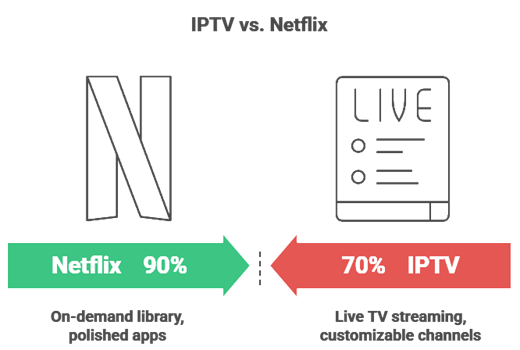
IPTV excels at live TV streaming, customizable channel bundles, and localized content, giving users control over what they watch. Netflix stands out with a massive on‑demand library, polished apps, and strong recommendations. IPTV’s interface and channel quality vary by provider, while Netflix offers consistent playback across devices. Pricing for IPTV is fragmented, whereas Netflix has clear tiers. Overall, Netflix delivers broader content reliability, and IPTV delivers real‑time TV flexibility.
What to Choose? (Decision Guide)
Choose IPTV if you want live broadcast channels, sports, and local programming in one feed. It fits users who value real‑time TV over on‑demand catalogs. Choose Netflix if you prefer a huge selection of movies and series, polished interfaces, and personalized recommendations. Netflix best suits viewers who prioritize curated on‑demand content and multi‑device playback.
Conclusion
Both platforms serve viewing needs differently. IPTV focuses on live traditional TV over internet, giving channel variety and real‑time access. Netflix centers on on‑demand content, polished user experience, and device consistency. Viewers who want scheduled TV and localized channels lean toward IPTV, while binge watchers and series lovers prefer Netflix. Your choice should match whether live TV or on‑demand library matters more to your viewing habits.
IPTV Vs Netflix: Top Alternatives
Amazon Prime Video
Amazon Prime Video provides a vast library of movies, TV shows, and exclusive content. With a wide selection of genres and access to Prime Originals, it is perfect for users seeking both mainstream and niche content. The platform supports 4K UHD streaming and integrates with Amazon’s ecosystem.
Link: www.primevideo.com
Tubi TV
Tubi TV offers free streaming of movies and TV shows, supported by ads. It has a large catalog spanning genres like comedy, drama, and documentaries. Tubi’s easy-to-use interface and accessibility across devices make it ideal for viewers looking for a free option.
Link: tubi.tv
Hulu + Live TV
Hulu + Live TV combines on-demand and live TV streaming. It includes access to popular live channels like news, sports, and entertainment. Hulu offers customizable packages with the option for add-ons like HBO Max. Ideal for those seeking a comprehensive streaming service with both live and on-demand content.
Link: watch.plex.tv
FAQs
Which is better, IPTV or Netflix?
IPTV is ideal for live TV and real-time broadcasts, while Netflix offers a broader on-demand content library with personalized recommendations. Choose based on your preference for live TV versus on-demand content.
What are the pricing differences between IPTV and Netflix?
IPTV pricing varies by provider, ranging from $10 to $30 per month depending on the package. Netflix offers clear plans starting from $8.99/month for its basic plan.
Is IPTV free or does it require a subscription?
Most IPTV services require a subscription, with some offering free trials for short durations. However, most content requires a paid plan.
Can you stream movies on IPTV like Netflix?
Yes, some IPTV services offer on-demand movies along with live TV, but Netflix has a more comprehensive library for movies and series.
Which service is easier to use, IPTV or Netflix?
Netflix has a simpler interface, especially for beginners, while IPTV can be more complex depending on the provider and the setup.
Does IPTV have a free trial like Netflix?
IPTV services may offer short free trials from select providers, while Netflix does not consistently offer free trials at this time.
What are the main advantages of IPTV?
IPTV provides real-time TV channels and live sports coverage, making it ideal for users who enjoy traditional broadcasting over on-demand content.
What are the main advantages of Netflix?
Netflix offers an extensive on-demand content library, including original shows and movies, with personalized recommendations and easy multi-device access.
Which platform is better for sports, IPTV or Netflix?
IPTV is better for live sports broadcasts, while Netflix does not focus on real-time events but offers a selection of sports documentaries and movies.
Does IPTV support streaming on multiple devices?
Yes, many IPTV services allow streaming on various devices, including smart TVs, computers, and phones, but device support may vary by provider.
How does Netflix compare to IPTV in terms of video quality?
Netflix offers 4K streaming on supported devices, while IPTV video quality depends on the provider’s internet connection and broadcast service, but it can support HD or better.
Can AI help personalize my IPTV experience?
Some IPTV services use AI for personalized recommendations, but Netflix’s AI-driven recommendation system is more advanced and robust.
Does Netflix use AI to improve its content recommendations?
Yes, Netflix uses AI algorithms to offer tailored content recommendations based on user behavior, enhancing the streaming experience and discovery of shows.
Which service is more cost-effective for families, IPTV or Netflix?
IPTV may offer cheaper bundles for families who prefer live TV, while Netflix offers multiple profile support and reasonable pricing for family-friendly options.
Is IPTV safer than Netflix?
Both services have their own security protocols, but unlicensed IPTV services can pose risks, while Netflix follows strict security measures for data protection and user safety.